
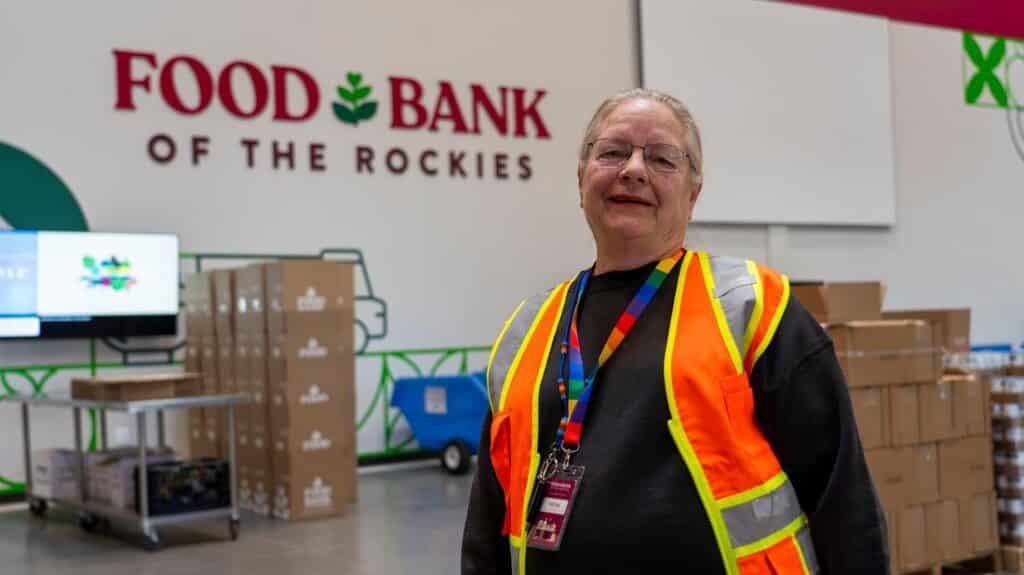
How Food Bank of the Rockies’ founder, Kathy Hackwith Groth, turned one moment in a supermarket alley into a movement still feeding the region
Kathy Hackwith Groth drinks her coffee black. This is the way she prefers most things: strong and deliberate.
“I like my coffee black,” she declares. “The blacker, the better.”
This small detail feels like the key to understanding her. Groth’s mindset — clear, steady, a hint of stubbornness — percolates through her life. From her childhood to the founding of Food Bank of the Rockies in 1978, what matters is what’s real, what works, and what needs to be done.
Groth grew up moving from place to place. “All over the country,” she says, before her family settled in Plattsmouth, Nebraska when she was in seventh grade. She’s the oldest of six, which she sums up with a line that feels both funny and true: “Well, there’s always somebody that’s not mad at you.” But the real story of her upbringing isn’t about the geography, it’s about how her family lived. Money was tight, but generosity wasn’t. Their house was rarely quiet and never closed off.
“There was always someone at the house,” she explains. “It was a household of: you’re all welcome, there’s going to be food; you don’t have to worry about that. We’ll make it work.”
That sense of openness wasn’t symbolic. Her mother made space, literally and figuratively, for whoever might show up. She always kept an extra place set at the table just in case someone showed up and needed food. No questions asked.
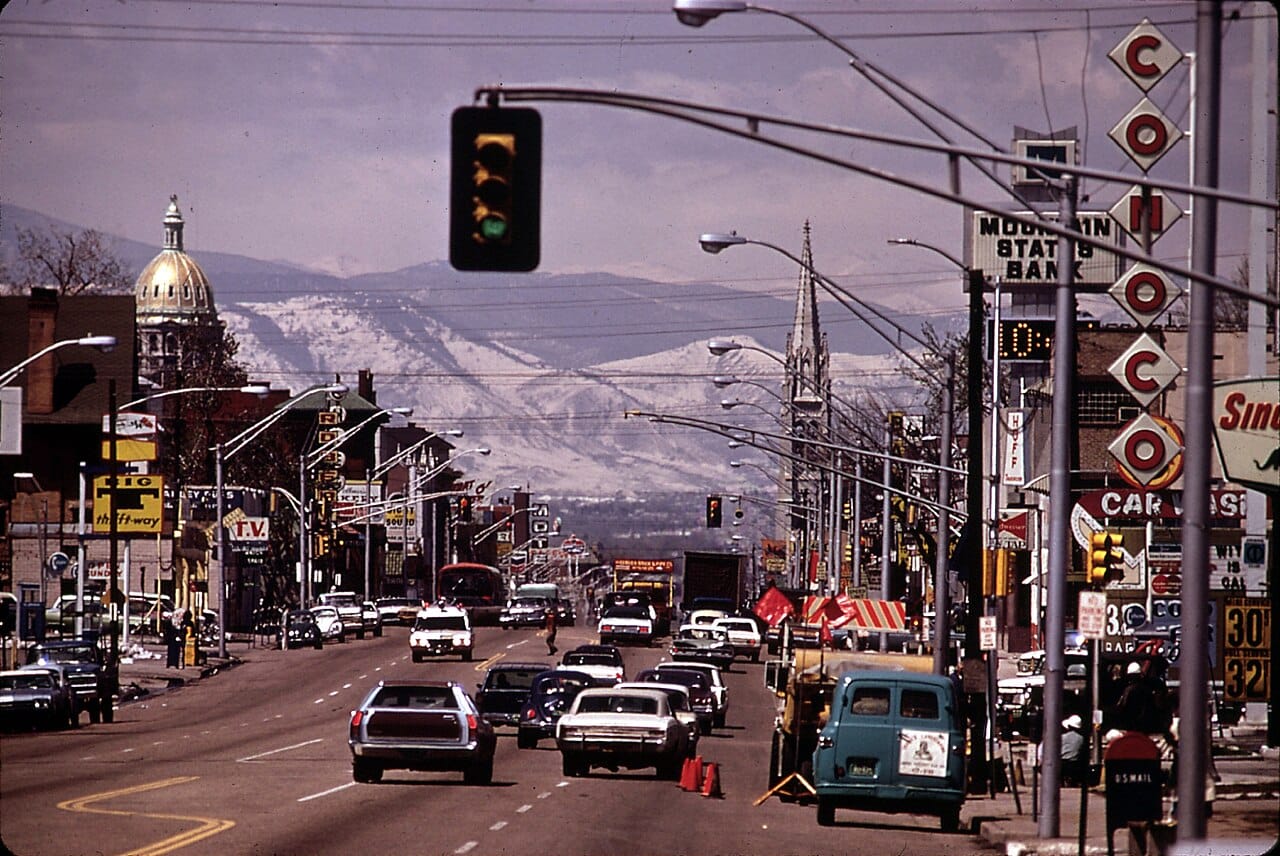
By the mid-1970s, Groth was in her early 30s and living in Denver. She had made connections to a downtown church. Like many churches of its time, its doors were open to a steady stream of people coming in for help.
“Down there in the basement were 50 to 100 men with jobs who couldn’t afford a place to live,” she says.
And that detail stuck with her. These weren’t people who had given up, they were people working and yet still falling short.
She got involved in the church’s small food bank, helping however she could. There was no big plan behind it; just a growing sense that something wasn’t adding up.
Then came the moment that changed everything.
“I saw somebody standing beside a dumpster, slitting loaves of bread and throwing them in a dumpster and then pouring bleach over.”
She was witnessing perfectly good food being destroyed on purpose.
“I said, ‘Why are you doing that? Couldn’t you give that to families that don’t have bread?’”
The answer was blunt.
“‘The store doesn’t want them to have that for free because then they wouldn’t come in here and buy it.’”
Groth didn’t walk away. She walked inside. She asked questions. She listened to the explanation about sales and consumer studies, but then kept pushing stubbornly until she achieved a different outcome.
“Well, it didn’t take me long to talk them into letting me have it.”
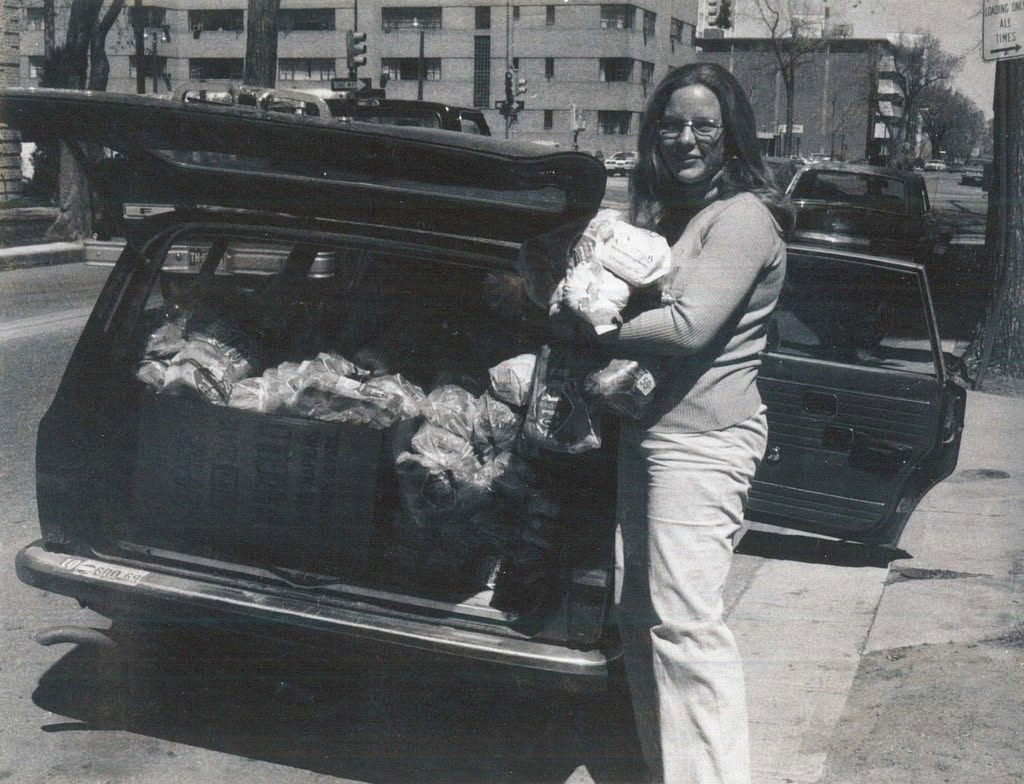
Soon, she was loading up her car. “The Volvo stuffed to the gills with the bread,” and ready to take it wherever it was needed. Churches. Schools. Families.
At one stop, after dropping off bread at a Catholic school, she was handed something small but meaningful in return.
“The man gave me an African Violet off of his windowsill to say thank you.”
That moment stayed with her.
“That’s when I realized the breadth of the need.”
Over time, Groth began to see something that still often goes misunderstood.
“People still think that if you get a job and get a place to live, you’ll be fine,” she asserts. “And that’s not true.”
She saw people working full-time jobs and still struggling to eat. Others working more than one job and barely making it home to sleep.
“I can show you people who have two full-time jobs…and they still can’t make ends meet.”
The harder truth is that much of this struggle is invisible.
“You look out here at these houses, and there are some people that are literally living lives of quiet desperation.”
From the outside, things can look fine. The lights are on. The lawn is cut. But inside, people are stretching every dollar, skipping meals, trying to hold things together.
When that struggle becomes visible, many people instinctively pull back.
“We look away. We think, ‘Not my problem. If I make eye contact, then he’s gonna want money.’”
But Groth spent years listening to people who have been on the receiving end of that reaction. What they remember isn’t money, it’s whether they were treated like they mattered.
“Even if you just give them eye contact and a smile… they appreciate that you’re acknowledging them as a fellow human. You’re human. You exist.”
For Groth, this idea is central. This work isn’t about charity in the traditional sense, it’s about connection, fairness, and recognizing that circumstances can shift for anyone.
“You can share. There’s a difference between saying, ‘This is charity,’ and, ‘I have extra, here you go.’”
Her mindset helped shape what the Food Bank would become. It is not just a place that gives things away, but a network of community members and partners coming together to move good food where it’s needed most with care and empathy.
Ask her why food became her focus, and her answer is both practical and deeply human.
“Food is the one thing that people can choose not to spend money on.”
When budgets get tight, food is often the first thing people cut back on. And once that happens, everything else gets harder.
“Children can’t think without it. Parents can’t not argue if they’re all hungry or trying to figure out how to find food.”
At the same time, the supply is there. That’s the part that particularly frustrates her.
“There’s plenty of it! There’s so, so much food!”
For Groth, the gap between abundance and need is the problem she’s been trying to solve from the beginning. Maybe it connects back to her father who had been a prisoner of war and experienced starvation during captivity. Maybe it connects back to her mother who always left a place setting for another. Maybe it connects back to that moment in the grocery store alley watching good bread intentionally ruined and dumped.
Regardless, her belief is clear and steady: food isn’t just fuel. It shapes how people feel, how they think, how they relate to each other.
“To feed someone is an act of personhood. It’s an act of love from me.”
Groth’s story didn’t start with a grand vision. It started with noticing something that didn’t make sense. She refused to look the other way. There was good food going to waste. There were people in her community who needed it. She made it her problem. She stepped in to connect the two. Like her coffee, her mission was strong and deliberate. And then she kept going.