
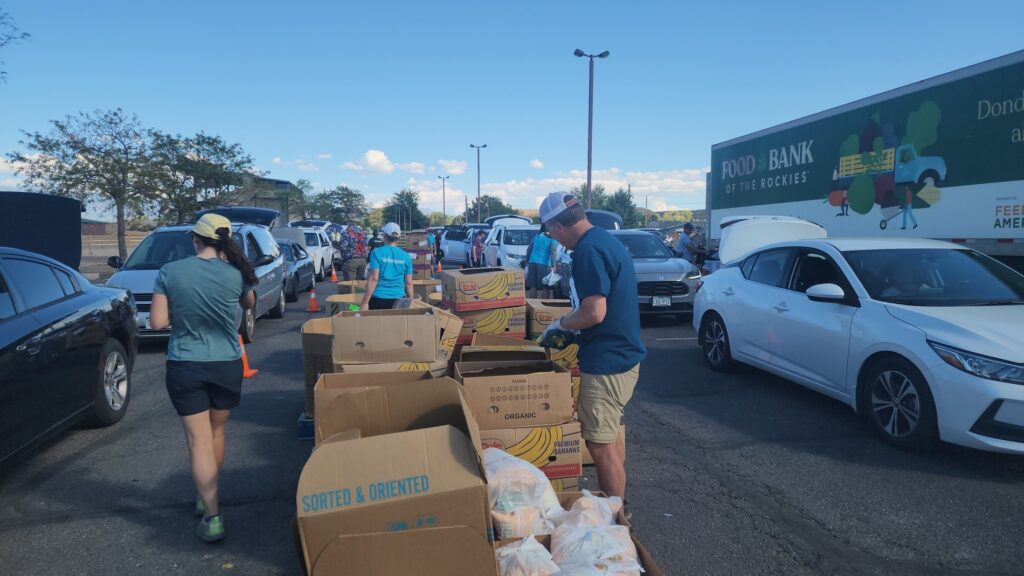
Nearly 58,000 Western Slope residents are food insecure, about 1 in 8 people, according to Feeding America’s latest Map the Meal Gap report.
The data additionally shows 17,460 children across the Western Slope, a staggering 1 in 5, are experiencing food insecurity as more families struggle to make ends meet.
“These aren’t just statistics; these are our neighbors,” says Erin Pulling, President & CEO of Food Bank of the Rockies. “These are real people, families, children, and older adults, having to choose between putting food on the table or paying for housing, healthcare, or other essentials.”
Hunger in our region is at its highest level in 12 years. The level of food insecurity has been steadily increasing every year since the pandemic as individuals and families have been navigating rising costs of food, housing, insurance, utilities, and more. Additionally, life events like the loss of a job or a medical emergency can force neighbors into near-impossible situations where meals are sacrificed to cover bills.
At the same time, government food support programs have also been cut in recent years, leading more neighbors in our region to turn to Food Bank of the Rockies and our Hunger Relief Partners for food.
Pulling says addressing food insecurity is a community-wide effort.
“We can’t solve the problem of hunger or food insecurity in our region without our Hunger Relief Partners or our volunteers and donors,” she says.
September is Hunger Action Month, and Food Bank of the Rockies and our partners are asking people to get involved by making a gift, volunteering, or supporting their local food pantry.