
If you’ve ever felt motivated to join the mission to help end hunger in your community, but been a bit confused about where to start, don’t worry, you’re not alone! Even a straightforward good intention like stopping by your local food shelf to volunteer can get confusing when you start encountering new terms like “food bank,” “hunger relief program,” and “mobile food pantry.” What does it all mean, and where should you start?
The truth is that the movement to make sure that no one in the United States lives with food insecurity involves a vast network of organizations working together. By learning some basics and key terms, you can find the best way to help answer the challenge of hunger in your own community.
What is a food pantry?
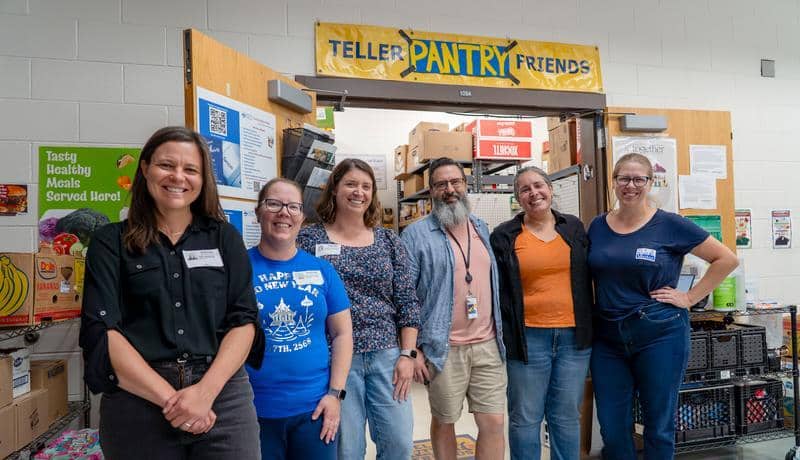
Food pantries are the ground-level, grassroots food distribution centers where individuals and families in need can go to receive food directly. As a result, their size, amenities, and offerings vary greatly depending upon the needs of the communities they serve.
A food pantry might look like a small cluster of tents next to a delivery truck in your local church parking lot, or a lunchroom full of folding tables stocked with grocery bags at your neighborhood elementary school. It might even look like a fully stocked grocery store that allows community members to select items a la carte at no cost. Some food pantries prepare hot meals for community members multiple times per week. You may have heard the term “soup kitchen” used to refer to this type of food pantry, but offerings often extend far beyond soup!
How do food pantries work?
Food pantries partner with larger hunger-relief networks, often food banks within their state or region, to source the food that they distribute to their community members. While food pantries distribute a huge variety of different types of resources, their common offerings are packages of shelf-stable kitchen staples. These are food items that are nourishing, versatile, and don’t require refrigeration — think easy-to-cook grains, peanut butter, and canned veggies, fruits, and meats.
Some food pantries make an extra effort to stock food items that are culturally relevant to their communities. This could look like a food pantry in a predominantly Latino community prioritizing staples like tortillas and hominy, or a pantry based in an indigenous community offering traditionally significant grains and proteins.
Mobile food pantries further increase food accessibility by meeting our community members where they live. These programs schedule deliveries to communities that lack food access, either delivering to nearby public locations or directly to residents’ homes.
What is a food bank?
Food banks operate on a much larger scale than food pantries, leveraging their network of partnerships to source, sort, package, and redistribute significant quantities of food. Think of pantries as the ground-level spaces where community members pick up their food, and food banks as the larger organizations that supply those individual community nodes. Food banks vary in size depending on the needs of the region they serve, but many are huge enterprises with operations spread across multiple facilities.
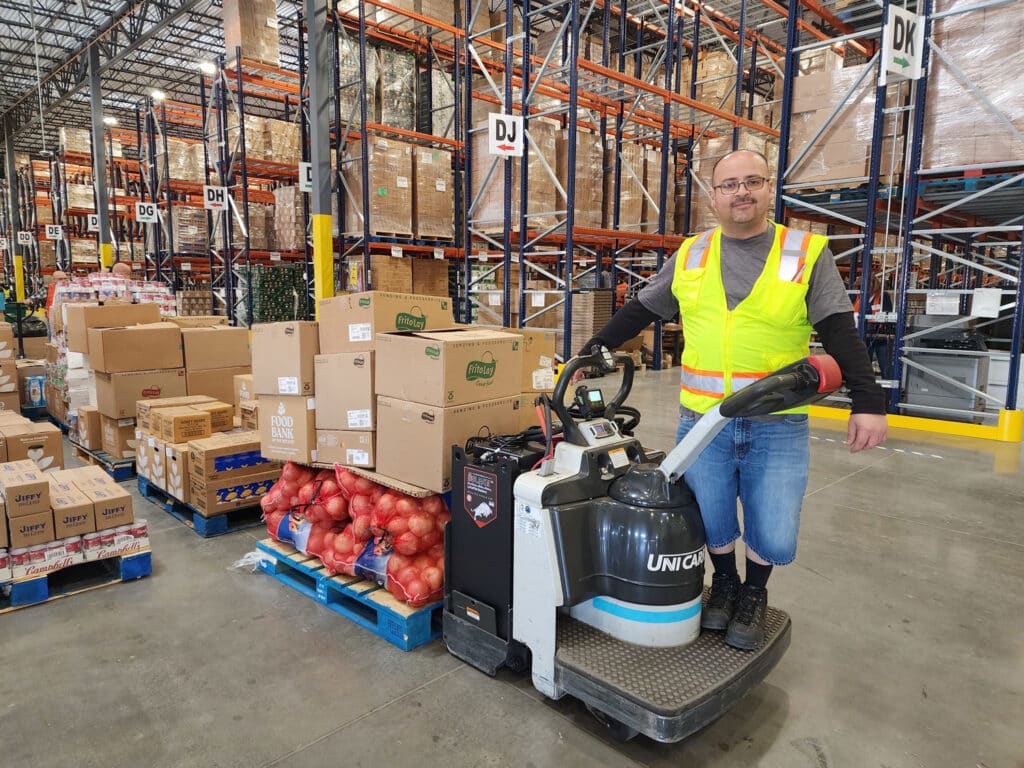
Food banks’ operations are usually centered around facilities called distribution centers, which are often larger than any of the grocery stores or warehouse clubs where you typically do your shopping. These are often industrial-scale facilities equipped with features like loading docks, warehouse storage, volunteer centers, and large walk-in coolers and freezers that help them manage the sheer quantity of donations that they receive.
How do food banks work?
Food Banks partner with an interconnected web of other organizations to source up to millions of pounds of food from food industry enterprises, local neighbors, retailers, grocery stores, restaurants, and more.
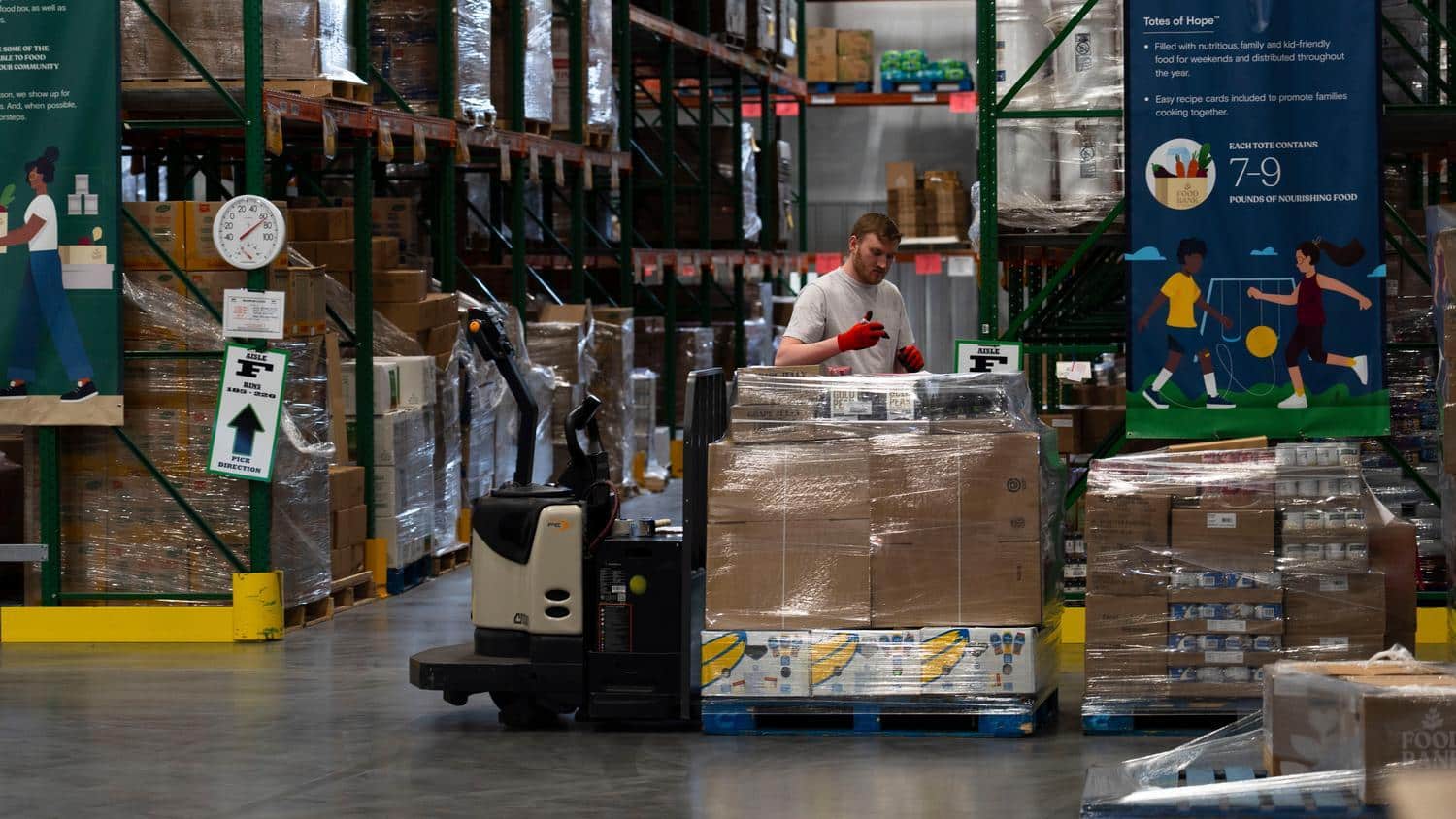
Once the food items arrive at a distribution center facility, staff and volunteers inspect the food for safety and nutritional value, then food items are sorted and stored to maximize shelf life. Food items will then be packed onto pallets for large-scale redistribution or packed into individual or family-sized grocery and meal boxes for redistribution at food pantries. Some ingredients are routed directly to organizations that prepare food like soup kitchens, and some distribution centers even have prep kitchen facilities on site to make fresh meals to distribute.
Once food items are packed and ready for redistribution, they’re loaded onto a fleet of vehicles that deliver the food to pantries around the region, and sometimes directly to families and individuals via mobile food pantry programs. Depending on the needs of the region, these delivery networks can vary greatly in size and range served. For instance, Food Bank of the Rockies’ network of partner organizations covers a service area of 150,000 square miles, making our network the largest food bank distribution area in the contiguous United States. Our organization also deploys 70+ refrigerated semitrailers through our Mobile Pantry Program each month to urban and rural communities throughout Colorado and Wyoming to bring food wherever it is needed most.
In addition to the food pantries that they support, food banks also distribute food via a variety of supplementary programs targeted at groups where conditions like hunger and food insecurity can be especially harmful, such as children and older adults. Food Bank of the Rockies provides specialized programming for after-school, summer, and weekend meals for children through our Food for Kids programming. We prioritize the health of older adults through Everyday Eats, a federal program available to income-qualifying adults ages 60 and older. And, though the Food for Health Program, we support the well-being of our neighbors living with chronic illnesses and food insecurity by partnering with healthcare centers and delivering medically tailored food boxes to program participants once a week for six months, then, for months 7-12, participants receive a $35 monthly produce prescription card to select their own fresh fruits and vegetables, continuing their path to better health.
Regardless of whether you choose to get involved at your local food bank or food pantry, you’ll be making a big difference in your community by helping to ensure that your neighbors have access to the nutritious food they need. Whether you’re raising funds, donating food, or volunteering your valuable time and effort: Thank you for helping us meet the challenge of hunger in our region!
Here are a few ways you can get involved with us!
Volunteer with Food Bank of the Rockies
Learn more about Food Bank of the Rockies
Join Food Bank of the Rockies as a monthly donor
Make a one-time gift, legacy gift, or a gift in a loved one’s memory or honor