
Early in July, Congress passed a budget reconciliation package that has been referred to as the “One Big Beautiful Bill Act.” Estimates show that this bill represents the largest reductions to SNAP and Medicaid in history — nearly $200 billion from SNAP (equating to roughly 6 billion meals per year) and more than $900 billion from Medicaid, which is estimated to result in at least 8 million people losing access to healthcare coverage.
The SNAP reductions will be realized through increases to paperwork requirements, narrower eligibility requirements, and less flexibility in updating benefit levels to reflect rising food costs (taking effect in 2025), as well as shifting costs to states (taking effect in 2028). Across Colorado and Wyoming, more than 627,000 people rely on support from SNAP to put food on the table, most of whom are families with children and/or families with members who are older adults or disabled. For every meal that a food bank can provide, SNAP provides nine.
The Medicaid changes will place an additional burden on people to choose between purchasing sufficient food and paying for critical healthcare costs.
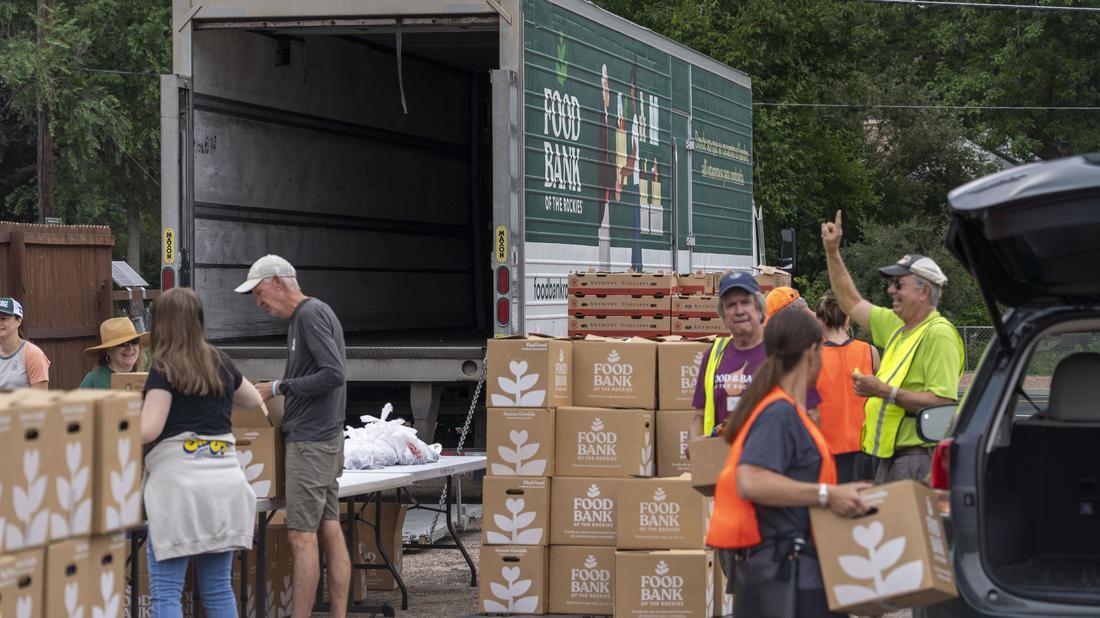
At Food Bank of the Rockies, we will continue to show up for our neighbors facing food insecurity. We also recognize that these changes will equate to more people turning to the Food Bank and our Hunger Relief Partners for support. We will be facing this increased need at a time when we have already absorbed reductions in USDA government commodities totaling 7% of our total food supply, or 14,000 meals per day.
To meet the increased need we’ll be seeing in coming months and years, we are stepping up in even bigger ways to support our community — increasing our volunteer base, donated food supplies, and the efficiency of our operations. How are we going to do this? Our Denver location will be relocating to a new, purpose-built facility this winter, which will benefit our entire Food Bank of the Rockies and Food Bank of Wyoming service areas.
Additionally, community members can help our efforts by volunteering, donating, or holding a virtual food drive.