
Last fall, a SNAP benefit freeze focused national attention on hunger. Now, many families are still struggling to access the support they need.
The federal government shutdown last fall froze SNAP benefits. This crisis brought public food assistance into the national spotlight. For many people across Colorado and Wyoming, it was the first time they realized how many local families rely on SNAP — the Supplemental Nutrition Assistance Program — to help put food on the table.
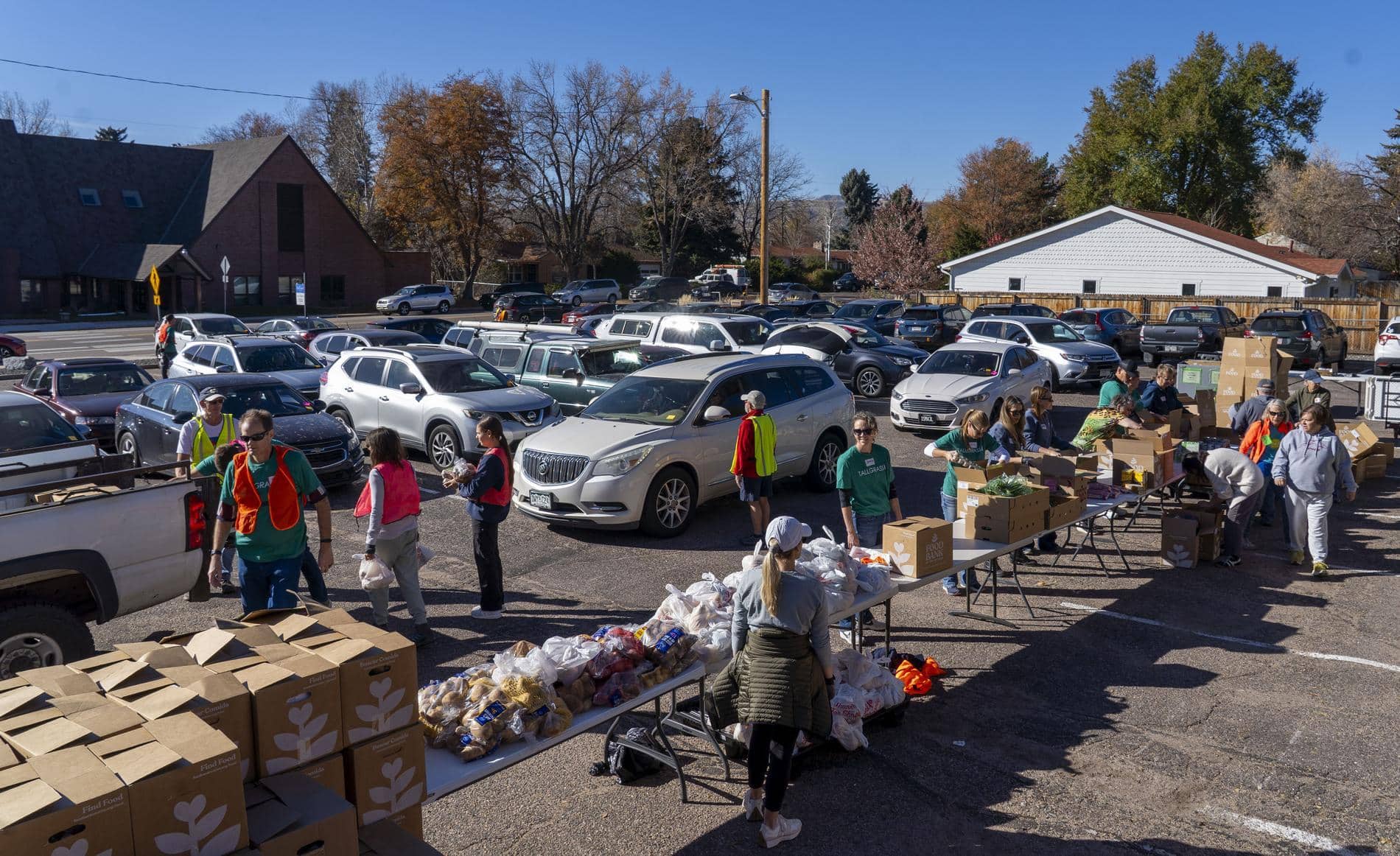
Our community of donors and volunteers responded immediately in the wake of the shutdown. The swift response enabled Food Bank of the Rockies and our Hunger Relief Partners to expand distributions and help families facing uncertainty.
While the shutdown ended and the headlines moved on, the challenges to food access did not.
Today, many families in Colorado, Wyoming, and across the country are navigating the changes to SNAP eligibility requirements that began rolling out last fall. For households already juggling work, child care, housing costs, and other daily responsibilities, these changes can create new barriers to accessing food assistance. Across Colorado and Wyoming, food pantries continue to see the impact.
More Than a Government Program
SNAP is designed to help families who don’t earn enough income to consistently afford food while also paying for necessities such as housing, transportation, child care, and utilities. The program provides supplemental funds that can be used at local grocery stores and farmers’ markets. SNAP helps households stretch limited budgets further.
“SNAP is a nice complement to make sure that families have the foods that they need, and they can access them from local grocery stores,” says Monica Buhlig, chief impact officer for Food Bank of the Rockies and Food Bank of Wyoming.
“The hunger relief network can do a lot for families, yet we can’t meet all of their food needs.”
While food banks and food pantries play a critical role in helping neighbors facing hunger, they were never designed to replace SNAP. Rather, public food assistance programs like SNAP work with food banks to help families meet their needs.
In Colorado and Wyoming, SNAP supports approximately 603,000 people each month. SNAP benefits not only help families purchase food, but they also serve to support local retailers and circulate dollars back into local economies.
Why Eligibility Changes Matter
Federal legislation signed in 2025 expanded SNAP work requirements for most adults and introduced new eligibility rules. The expanded requirements mean that people who are not working or volunteering a minimum of 80 hours per month are only eligible for three months of SNAP every three years.
Additionally, Medicaid eligibility changes are also scheduled to take effect beginning this December.
As Buhlig observes, “these eligibility changes make it harder for people who often struggle to find and maintain employment to get food support.”
Often, employment circumstances do not change that quickly.
“People’s life circumstances don’t change that rapidly,” Buhlig explains. “People are better positioned to seek and obtain employment when they are able to focus and perform because they are well nourished.”
What Food Bank of the Rockies and Our Partners Are Seeing
For years, food pantries have typically seen an increase in visitors toward the end of the month, when SNAP benefits begin to run low. Our network of Hunger Relief Partners has long planned for that pattern.
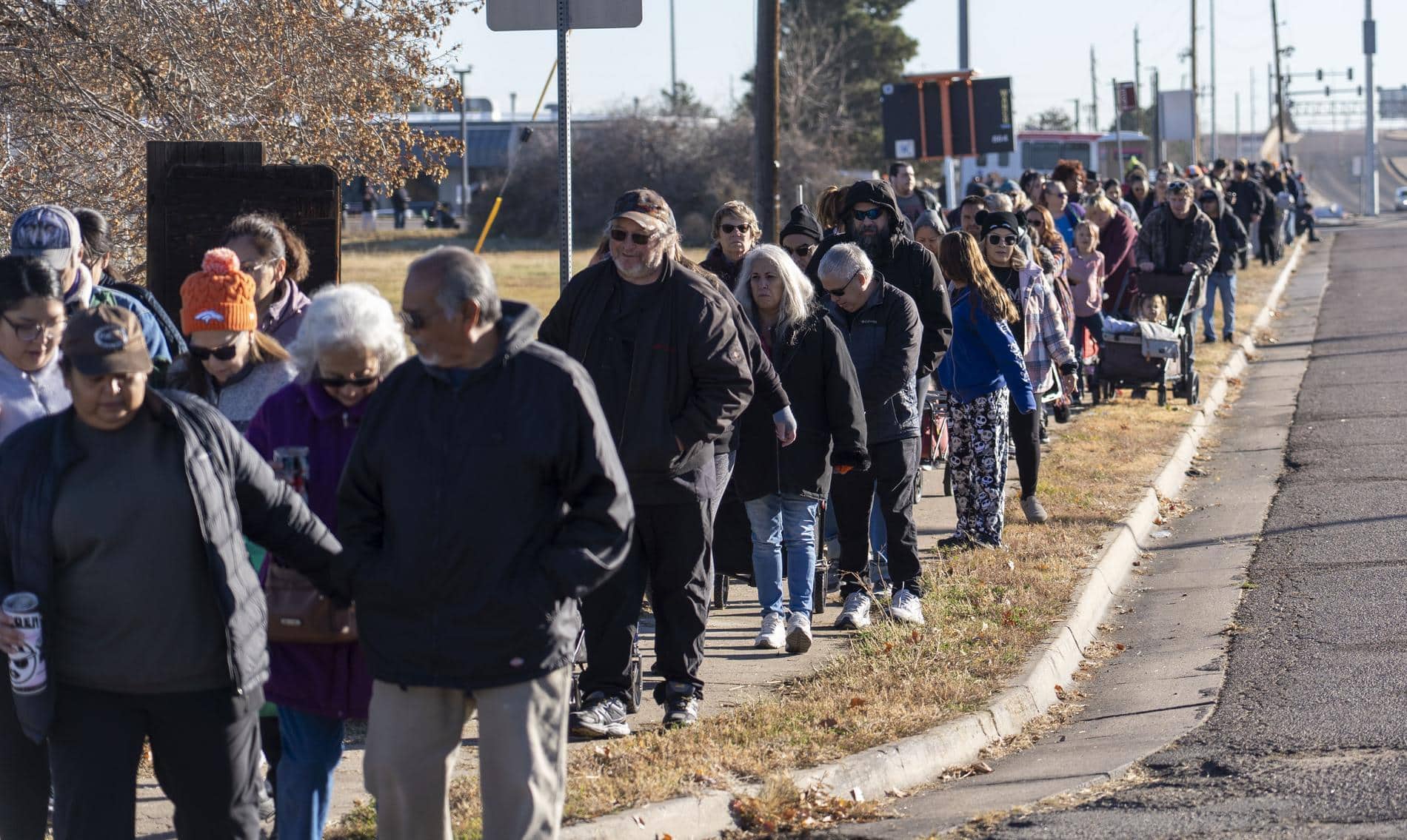
Now, however, our partners are telling us that more neighbors are seeking help throughout the month.
“We’re seeing a greater demand throughout the month because some people are no longer receiving SNAP benefits, and some people are receiving less than they previously received,” Buhlig says.
At the same time, families continue to face rising costs for necessities like housing, groceries, transportation, and insurance. As expenses climb, household budgets become even tighter.
As a result, more neighbors are relying on emergency food assistance throughout the month.
How Do People Put Food on the Table While Facing These Changes?
When families receive less assistance or lose access to benefits, they still need to put food on the table. What changes is how they make it work.
“They are looking for the lowest-cost, highest-calorie foods because the goal is to keep bellies fed,” Buhlig adds. “They’re going to look at cost per calorie and food density so that the pains of hunger are minimized.”
These conditions create difficult tradeoffs for families. Parents and caregivers want to provide both nutritious meals and nutrient-dense foods that support their family’s health. But when resources are limited, affordability often becomes the deciding factor.
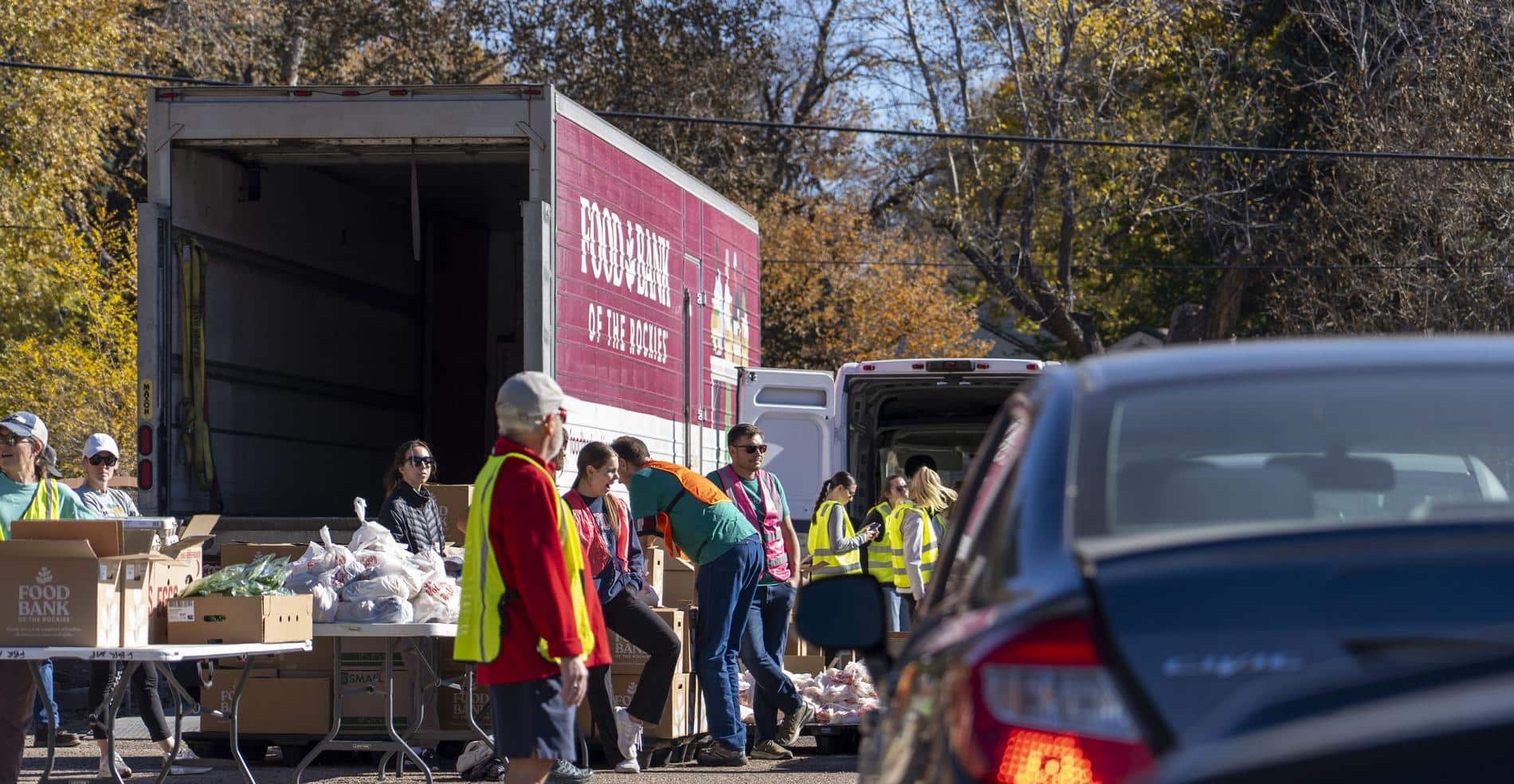
“People should not have to choose between nutrition and affordability,” Buhlig asserts. “This is why Food Bank of the Rockies emphasizes nutritious foods like produce and proteins when sourcing food for Hunger Relief Partners and our mobile pantries — to increase access for individuals and families.”
Our Network Is Strong, But It Cannot Replace SNAP
Food Bank of the Rockies works with more than 700 Hunger Relief Partners across Colorado and Wyoming. Together, we also distribute food directly to neighbors via more than 50 mobile pantries. Together, we help ensure food reaches urban neighborhoods, mountain communities, rural towns, and communities across the region. It is a strong network. Still, it cannot fully replace what SNAP provides.
“I think oftentimes it can be safe to assume that with a robust hunger-relief network, people should be good without SNAP,” Buhlig says. “That isn’t the case.”
Approximately $120 million in SNAP benefits are distributed to Colorado households each month. Food banks and food pantries are intended to supplement this and other resources, filling gaps, responding during emergencies, and supporting people who may not qualify for assistance.
What Gives Us Hope
Despite the challenges, Buhlig says one positive outcome from the conversations surrounding SNAP over the past year is greater public awareness.
“There was a point in time when I was not confident that the greater community understood what SNAP was,” she explains. “Now I see, every day, community members and organizations understanding even more how important it is for all of us to lean in and support one another because people are struggling.”
The government shutdown and freeze on SNAP benefits brought national attention to hunger. While it may not be front-page news anymore, the need remains.
“People understand how prevalent hunger is in our communities,” Buhlig says. “That it is people they know, people they never anticipated to be experiencing hunger, and people they don’t know — and they care.”
Last fall, our community of donors and volunteers responded with incredible generosity to the hunger crisis we were seeing in our region, enabling Food Bank of the Rockies and our Hunger Relief Partners to provide immediate food support for families facing uncertainty. Despite the changes since then — and those on the horizon — donors, volunteers, and staff, like Buhlig, are committed to meeting the challenge of hunger head-on.
“We will figure it out, and we will continue to remind people that it takes concerted efforts at the federal level, at the state level, at the local level, and at the hunger relief partner level.”