
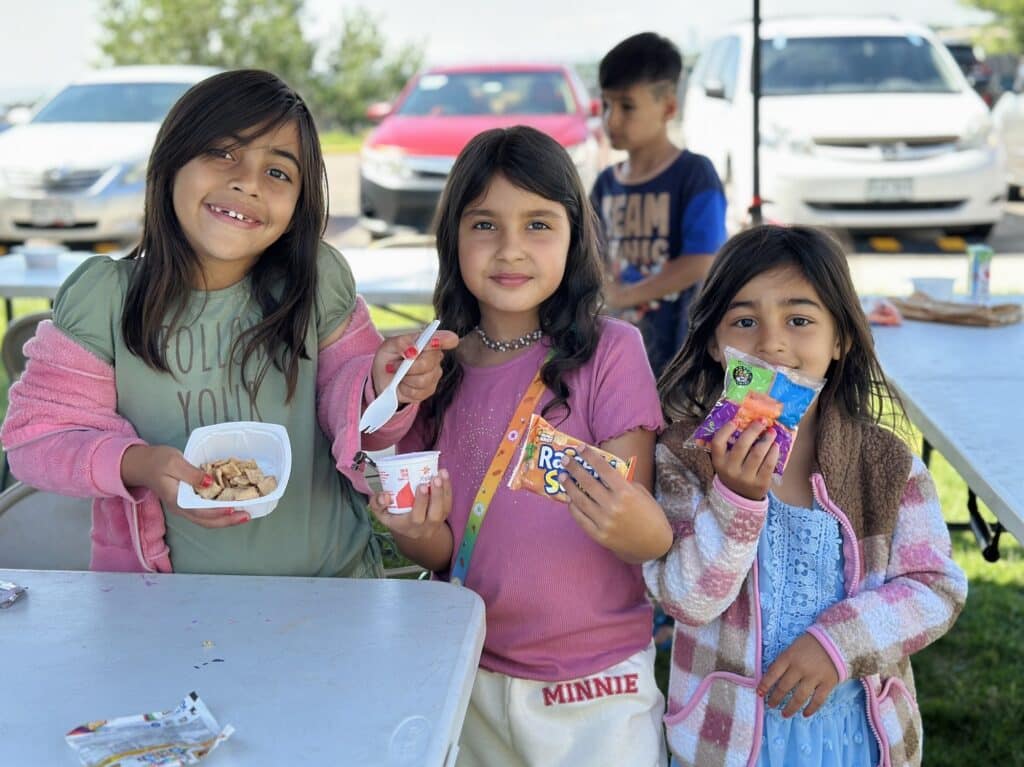
The phrase “school lunch” often comes loaded with strong memories: the fresh plastic smell of a new lunch box, the bright lights of a cafeteria, the flavors of a favorite dish. But beyond nostalgia, school lunches and food programs are also one of the most successful nationwide efforts in meeting the challenge of childhood hunger. For many American kids, the meals they eat at school represent the most nourishing meal they’ll eat all day.
As school starts back up and families prepare for the school year, now is a great time to get involved and help ensure that every child in classrooms across our service area have access to the nutritious, tasty food they need to get the most out of their education.
Defining childhood hunger
Hunger in children represents a broad spectrum of both medical and socioeconomic conditions that surround a child’s well-being and access to food.
Hunger is often associated with malnutrition, which is a medical condition defined by a child’s nutrient intake. Another key term to know is food insecurity, which is a socioeconomic condition defined by a child’s lack of access to nourishing food. Food insecurity is especially pervasive in the population aged 18 and younger, affecting one in every eight children in the United States and representing a variety of scenarios that might limit a child’s access to nutritious food.
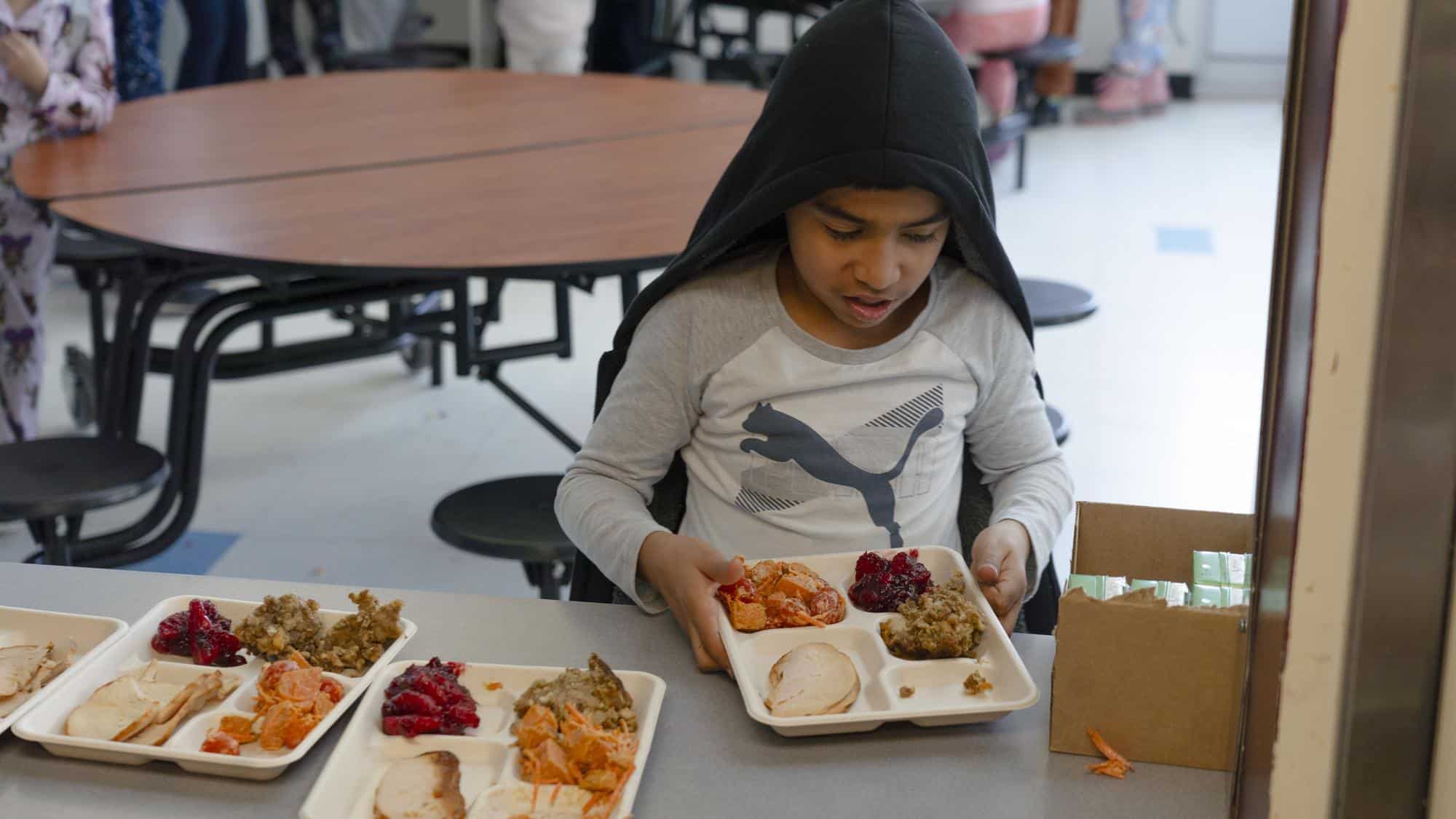
Some children live in households experiencing poverty, where adults and even children have to skip or limit meals due to limited budgets. Others may live in communities that are isolated geographically or economically from grocery stores, making it difficult for them to obtain affordable, nutrient-rich food. These areas are present in many different types of communities, from urban to rural.
By digging deeper into the definition of childhood hunger, we are able to gain some nuance in our understanding of the issue. Children lacking sufficient nutrition may actively experience malnourishment while also lacking the energy needed to fully engage, learn, and grow. Now that we have a better idea of what childhood hunger means, let’s explore the efforts being undertaken in and around our schools to mitigate its effects.
Free meals at school = an effective formula
What’s a great way to make sure kids are getting the nutrition they need? Feed them while they’re at school! Programs like the USDA’s National School Lunch Program have been proven to be one of the country’s most effective tools in reducing childhood hunger by ensuring food access within the schools where many children spend the majority of their days. Coupled with other national programs that provide food for children at daycare programs and during summer break, school meals are crucial in covering gaps in access for families experiencing food insecurity that may not qualify for federal nutrition programs such as SNAP, Child Nutrition, and WIC.
Established by President Truman in 1946, the National School Lunch Program (NSLP) currently provides nutritionally balanced, free or low-cost meals to 30 million children across 97,000 public and nonprofit learning institutions annually. Roughly two decades after NSLP was founded, the United States established the School Breakfast Program (SBP), which reimburses schools to operate nonprofit breakfast programs.
Making it easier for children to access the food they need to get a great start on their day is a crucial part of setting them up for academic success. USDA studies have shown that children from households experiencing food insecurity are significantly more likely to skip breakfast than their food-secure classmates, putting them at a disadvantage. In another study cited by the USDA, children who eat a nutritious breakfast were shown to experience improved moods and increased alertness throughout the morning, and report less hunger throughout the day.
Simply put, feeding kids in schools works. Programs like the NSLP and SBP have been shown to significantly reduce rates of food insecurity for participating children, and studies also found that these programs improved kids’ diet quality and academic performance. These school meal programs are further enriched by newer federal programs like the Fresh Fruit and Vegetable Program (FFVP), which provides a free daily snack of fresh fruit and vegetables to children at eligible elementary schools. A similar auxiliary program is the The Patrick Leahy Farm to School Program, which makes it easier for institutions to incorporate local foods into school meal programs and works with tribal communities to promote food sovereignty and the integration of traditional food practices into tribal meal programs.
Feeding kids when school’s out
While school-based food programs are an important piece of solving the puzzle of childhood hunger, organizations like Food Bank of the Rockies also play a key role in providing meals for children outside of school hours.
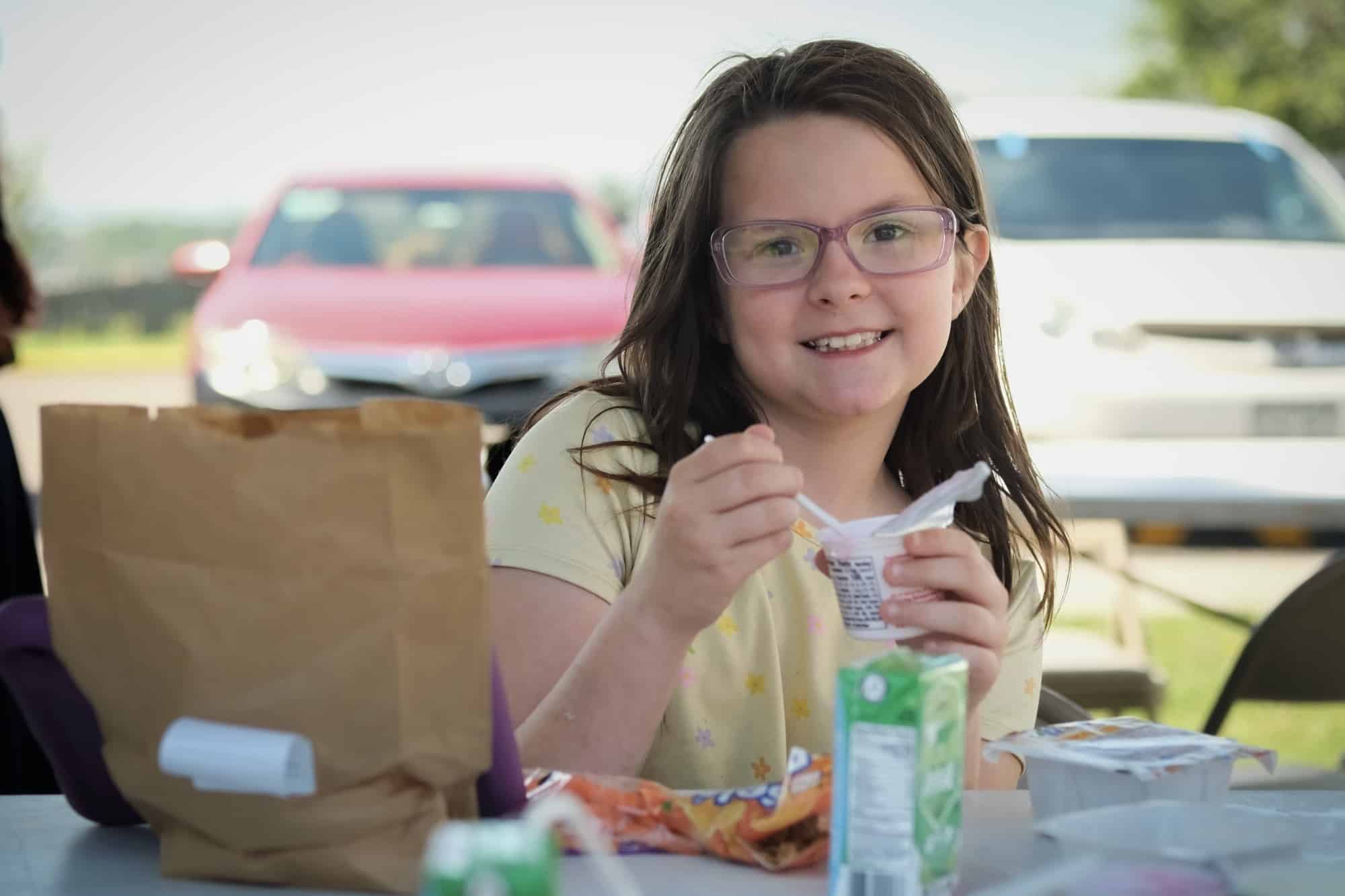
Last year, Food Bank of the Rockies served nearly 80,800 kids in our service areas throughout Colorado and Wyoming through a combination of initiatives. Food Bank of the Rockies provides summer and after-school meals through the USDA’s Summer Food Service Program (SFSP, also known as SUN Meals) and Child and Adult Care Food Program (CACFP) at dozens of summer and after-school meal sites. Created as federal supplements to NSLP and SBA, these programs provide reimbursements to institutions for nutritious meals and snacks for eligible children who are enrolled at participating childcare centers, daycares, after-school care programs, and for children residing in emergency shelters.
In addition to participating in these federal programs, Food Bank of the Rockies operates the Totes of Hope® Program. This program is independently funded and provides bags of food for kids to take home with them over the weekends. Totes of Hope® contain a mix of kid-approved (and nutritionally sound) items to keep kids nourished when school is out of session.
How you can help
When you support Food Bank of the Rockies with a generous donation or by signing up to volunteer, you’re helping to ensure robust, consistent funding for programs like Totes of Hope® that have played a crucial role in helping meet the challenge of food insecurity in our region. Regardless of how you choose to get involved, we thank you for your dedication to the cause of making sure every child has the food they need to achieve their dreams and life a full life.